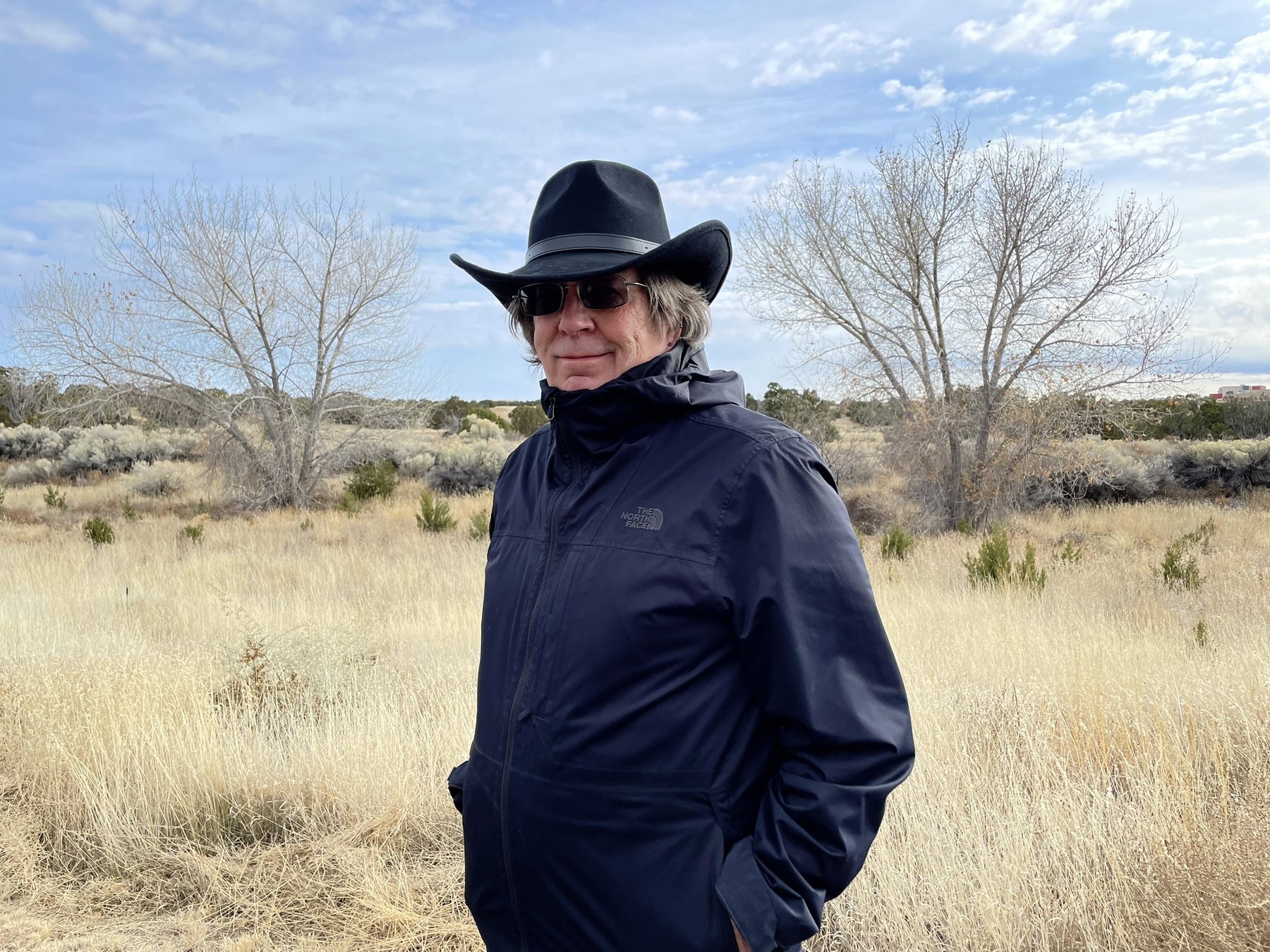
  Rob
Tow Rob
Tow |
|
I worked in Cold War electronic warfare at Northrop, in color perception and imaging at Schlumberger Palo Alto Research, and at Xerox PARC, where I was principal inventor of the DataGlyph embedded digital data technology and patented an amorphous-silicon scanner design grounded in perceptual color correction. At Interval Research, as employee number nine, I worked on immersive virtual environments, affective robotics, video interfaces, and embodied computation: the Placeholder project, with Brenda Laurel and Rachel Strickland at the Banff Centre; and the Birds and Bees emotional robot project and Sparky social robot, which yielded my two fundamental patents on affective communication between humans and machines, with Charles Darwin's The Expression of the Emotions in Man and Animals cited as the major prior art. Later work extended the same sensorium outward: AT&T Labs' Fair Witness wearable video escrow concept and the Kava wearable Linux computer; Sun Labs' Sun SPOTs, Java running on tiny ARM motes; Linux camera and satellite-comm software for autonomous wave- and solar-powered ocean-going marine robots at Liquid Robotics; the world's first AR motorcycle helmet at Skully; the BLADE AR system for the blind at Toyota; camera bring-up for prototype Google Glass at Texas Instruments; concussion-related eye-tracking VR at SyncThink; low-shot AI document recognition at Glynt.AI; and wearable EEG for enhancing memory consolidation during sleep at NeuroGeneces. I am now co-founder of Akanthis, developing autonomous computer-vision drones to combat bird infestations of crops. In 2007 I spent a year as Senior Technology Strategist at NASA Ames Research Center, in the Strategic Business Development Office, brokering Space Act Agreements between major technology companies and NASA – including the multi-million-dollar Sun–NASA Memorandum of Understanding on supercomputing, Open Source development, and wireless sensor networks. A side trip to Cape Canaveral coordinated the deployment of Microsoft Research's advanced photogrammetric visualization software for Space Shuttle flight operations and possible Mars rover use. I hold 17 issued U.S. patents, with international equivalents in Europe, Germany, Canada, and Japan, spanning imaging, steganography, affective robotics, video navigation, wireless sensor networks, gesture interfaces, secure devices, augmented reality, and artificial intelligence. The recurring subject, whether in patents, robots, sensor networks, augmented reality, drones, or essays, is the same old animal in different machinery: perception under constraint, action under uncertainty, and the feedback loops by which bodies, instruments, and institutions discover what is real. My design method is structural rather than fashionable: find the unoccupied place in the design space; identify the capabilities needed to populate it; then discover, by engineering, what nature, money, time, institutions, and human bodies will actually permit. That same habit runs through my essays. I write about technology, science, politics, strategy, history, perception, and the machinery of civilization as coupled control systems rather than as slogans waiting for their tribe. Influences: Voltaire, John Boyd, Norbert Wiener, Charles Darwin, Lynn Margulis, and the old engineering discipline of being provably wrong before the bridge falls down. Tau Zero is my long-standing nom-de-infosphere, dating from The WELL before it was on the Internet. The name comes partly from Poul Anderson's 1970 novel Tau Zero, for which Anderson gave his blessing in person at a San Jose Worldcon in the 1980s; and partly from family history: Tow was once Tau – a small village in the far north of Norway. I live with Brenda Laurel at Nova Lux in the high desert of Santa Fe County, New Mexico. Before this, for decades, our home was Locus Voci in the Santa Cruz mountains, and we were fearless sea kayakers and abalone divers in Mendocino. With Brenda I record Tibetan bowls and ambient sound, collected on the Kelp Scum CD; and continue, as circumstances require, the wandering ronin school of research. |